



Welcome to Day 28 of 30 Spaces in 30 Days. Two spaces left after today — and this one is the most emotionally layered space in the entire challenge. I want to approach it gently, because sentimental items deserve a different kind of attention than a kitchen cabinet or a bathroom drawer.
Today we’re talking about the things that carry memory. The keepsakes, the mementos, the items that connect us to people and moments and chapters of life that matter deeply. Decluttering these spaces isn’t about letting go of the memories — it’s about finding the most meaningful and intentional way to hold them.
The Memory Lives in You, Not the Object
Here’s the most helpful reframe I know for sentimental items, and it’s one that has genuinely changed how Ben and I approach this category: the memory lives in you, not in the object. The object is a trigger for the memory — a way of accessing it, of feeling it again. But the memory itself is yours, completely, regardless of what happens to the physical thing.
This reframe doesn’t make every decision easy. But it opens the door to asking a more honest question: is keeping this physical object the best way to honor this memory? Sometimes the answer is yes — some objects deserve to be kept and displayed and loved. Sometimes the answer is no — and in those cases, there are beautiful alternatives that let you honor the memory without being weighed down by something physical that no longer serves you.
The Photo Approach
One of the most meaningful and practical things we’ve done for sentimental items is this: we photograph things we want to remember but don’t need to physically keep.
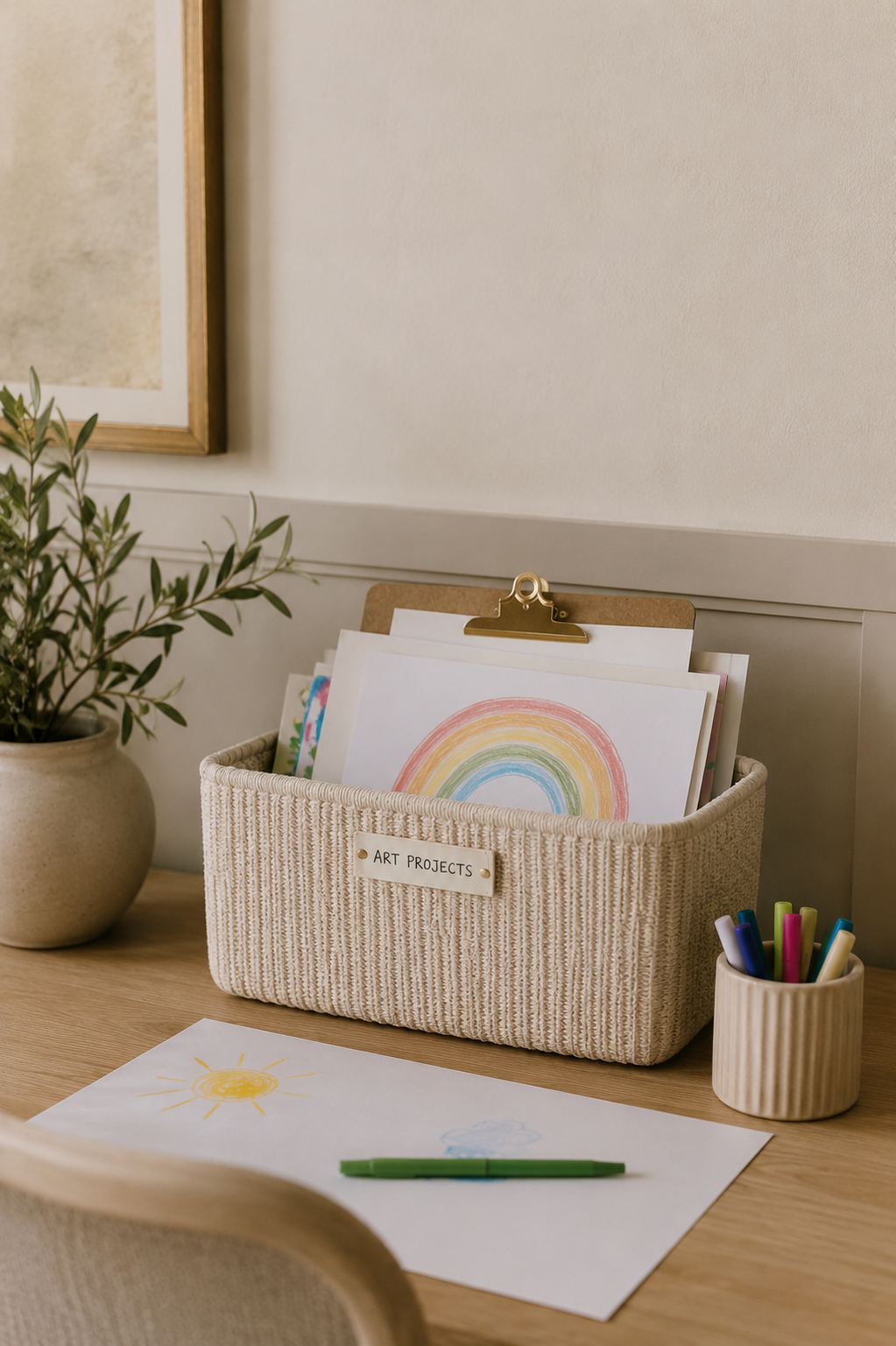
Ben did this with old art projects from his childhood — pieces that carried real meaning and memory but that he didn’t want to store or display indefinitely. He photographed each one carefully, created a digital album, and then let the physical pieces go. The memories are preserved completely. The objects are gone. And the result is a genuinely lighter feeling that he describes as more freeing than he expected.
This approach works beautifully for a wide range of sentimental items — childhood artwork, cards and letters, objects from people who have passed, items from previous chapters of life. You keep the memory in the most accessible and permanent form possible — a photograph — and you release the physical weight of the object itself.
Storing What You Choose to Keep
For the sentimental items you decide to keep physically, a dedicated and organized storage system makes all the difference. Separate bins by person or category — one for your own keepsakes, one for Ben’s, one for Ollie’s — clearly labeled and stored somewhere accessible enough that you can actually revisit them rather than just knowing they exist somewhere in the house.
Ollie’s bin is something we’re actively building and learning how to curate — what to keep from her early years, how to make thoughtful decisions about what represents this season of her life, how to store it in a way that she’ll be able to access and cherish someday. It’s an ongoing and evolving process, and I think that’s exactly right. You don’t have to have it figured out perfectly. You just have to be intentional about it.
How to Approach Your Sentimental Items Today
This space deserves more time and more gentleness than most of what we’ve tackled in this challenge. Give yourself an hour and approach it with patience rather than efficiency.
Step 1: Gather everything in one place. Bring all of your sentimental items together so you can see the full picture of what you’re holding. This step alone is often revealing — things you forgot you had, things that bring unexpected emotion, things that make you wonder why you’ve been keeping them.
Step 2: Hold each item and ask honestly. Does keeping this physical object serve me? Does it bring genuine joy when I encounter it? Is it something I want to display, revisit, and pass on — or something I’m keeping out of obligation or guilt?
Step 3: Consider the photograph option. For anything you feel conflicted about — items that carry memory but that you’re not sure you want to keep physically — photograph them before you make a final decision. Sometimes the act of photographing something and knowing the memory is preserved makes the decision to let go of the physical object feel completely right.
Step 4: Create a dedicated, labeled bin for what you keep. Everything you choose to keep physically goes into a dedicated, clearly labeled bin with a home it always returns to. One bin per person if possible — yours, your partner’s, your child’s. Kept somewhere accessible enough that these items can be revisited and loved rather than just stored.
Step 5: Be gentle with yourself. This is the space where there are no wrong answers. Keep what genuinely brings you joy and meaning. Photograph what you want to remember but don’t need to hold. Let go of what no longer serves you with gratitude for what it represented. And give yourself permission to come back to anything you’re not ready to decide about yet. This doesn’t have to be resolved in a single session.
The Lightest Kind of Keeping
The goal of today isn’t to minimize your sentimental collection down to nothing. It’s to make sure that what you’re keeping is kept with genuine intention — displayed, revisited, and loved rather than simply stored out of habit or guilt.
The memories that matter most to you are safe. They live in you, in the photographs you’ve taken, in the stories you tell, in the way certain moments have shaped who you are. The objects are just one way of holding them — and sometimes the lightest way of holding a memory is the most beautiful one.