Welcome to Day 19 of 30 Spaces in 30 Days. We’re deep into Week 3 now, and today we’re tackling one of the most personal and impactful spaces in the entire challenge — the bedroom closet.
Here’s what I want to say before we start: your closet is the first decision of every single day. Before coffee, before the day has asked anything of you, you open it and make a choice about what to wear. When that choice feels easy and good, the whole morning starts differently. When it feels hard — when you’re standing in front of a full closet feeling like there’s nothing to wear — the day starts with a friction that follows you longer than you’d expect.
Today we’re making sure that first decision feels as easy and as good as it possibly can.
Set It Up Around How You Actually Use It
Here’s the most important thing I want to share about closet organization, and it goes against a lot of the advice you’ll find online: the best closet system is the one that works for how you actually use your closet — not the one that looks the most impressive on Pinterest.
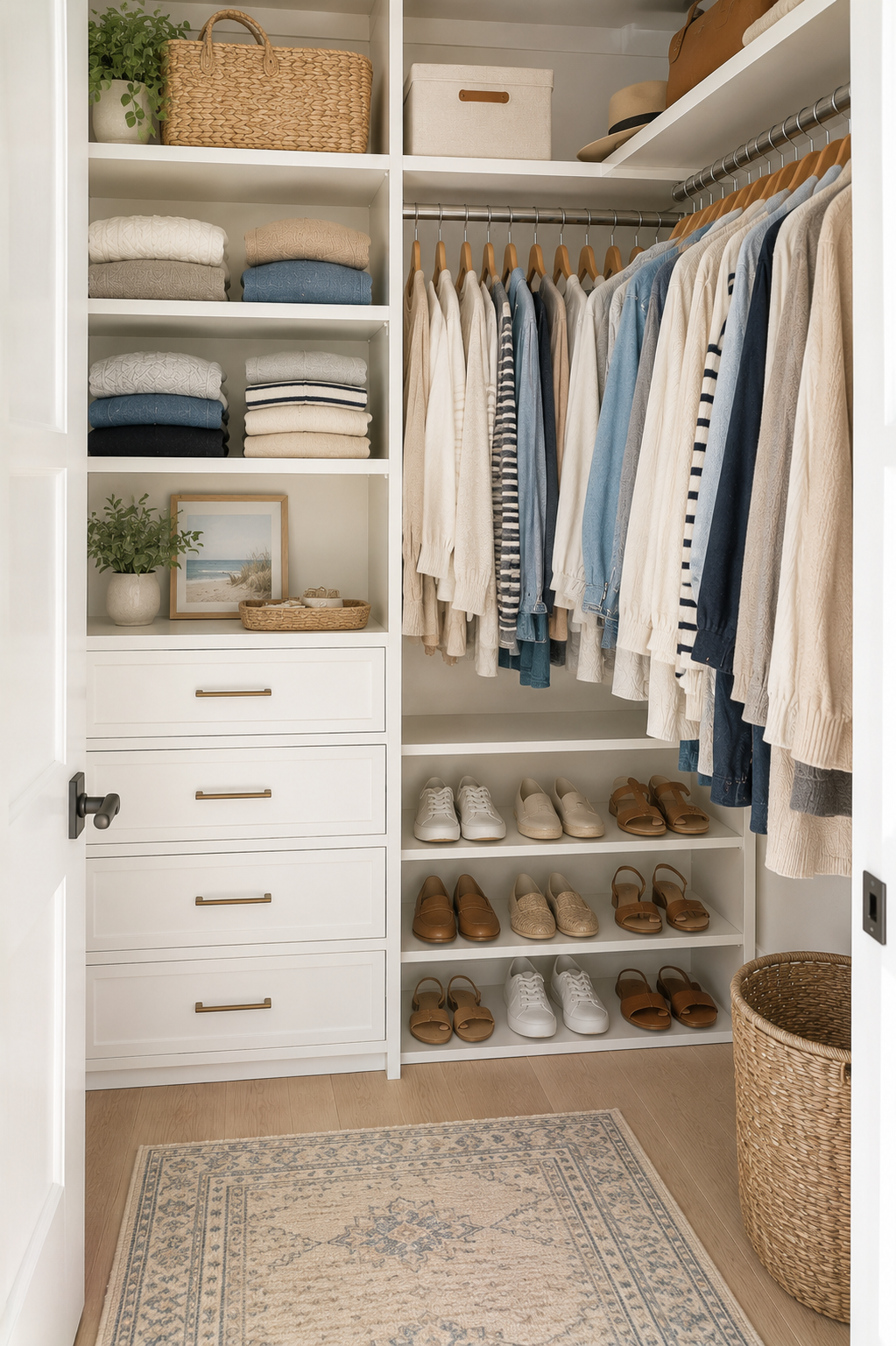
For me, that means hanging. Almost everything I wear gets hung up rather than folded — and that single approach has made our closet genuinely functional in a way that no amount of perfectly folded stacks ever did. When clothes are hung, I can see everything at a glance. I can find what I’m looking for immediately. Getting dressed becomes a scan rather than a search, and the whole morning flows so much more naturally.
Folding works beautifully for some people. Hanging works better for others. The point isn’t which method is correct — it’s which method actually works for you and your real daily routine. Today is a good day to think honestly about that, and to set your closet up in whatever way makes your mornings most effortless.
What a Well-Decluttered Closet Actually Looks Like
The most functional closets tend to share a few things in common regardless of how they’re organized. Everything in them is something you actually wear and feel good in. There’s enough breathing room between items that you can see and access everything without effort. And the things you reach for most often are most accessible — not buried at the back or on the highest shelf.
What a well-decluttered closet doesn’t have is everything you’ve accumulated over the years regardless of whether it still fits, still suits you, or still belongs to the life you’re actually living. Clothes from a previous season of life, items kept out of guilt or obligation, things that fit once but don’t anymore — those things take up physical space and mental space every single time you open the door.
Today we clear all of that out, and what’s left is a closet that genuinely works.
How to Declutter Your Bedroom Closet Today
Give yourself 45 minutes to an hour for this one. It’s a bigger space than most of what we’ve tackled this week, but the impact is immediate and deeply worthwhile.
Step 1: Take everything out. Every single item — off the hangers, out of the shelves, out of any bins or baskets. Laying everything out gives you a complete and honest picture of what you actually own, which is often more surprising than people expect.
Step 2: Clean the closet completely. Wipe down every shelf, vacuum the floor, dust the rod. A clean, empty closet is a genuinely motivating thing to rebuild with intention.
Step 3: Sort everything honestly into keep, donate, and let go. As you go through each item, be honest about condition, fit, and how it makes you feel. Keep only what fits well right now, that you genuinely wear, and that makes you feel like yourself when you put it on. Donate anything in good condition that simply isn’t serving you anymore. Let go of anything worn out or past its time.
Step 4: Use the honest test. For anything you’re on the fence about — if I saw this in a store today, would I buy it? If the answer is no, it doesn’t belong in your closet. This question cuts through the indecision that makes closet decluttering take twice as long as it should.
Step 5: Think about how you actually use your closet. Before you put anything back, think honestly about your real routine. Do you hang or fold? Do you organize by color, by category, by outfit? What makes getting dressed easiest for you specifically? Let your real habits guide how you rebuild, not how you think it should look.
Step 6: Hang what works best hung. If hanging is your system — like it is mine — hang everything that benefits from it. Tops, pants, dresses, jackets, all of it visible and accessible at a glance. When you can scan your whole wardrobe in seconds, getting dressed stops being a decision and starts being a pleasure.
Step 7: Return everything with intention. Put like with like, most-worn items most accessible, and give everything a consistent home. Your most-reached-for everyday pieces go in the most accessible spot. Less frequent items — special occasion pieces, out-of-season items — can live further back or on a higher shelf.
Step 8: Get the donate pile out of the house today. Same rule as always — straight to the car today, not next week. The moment it leaves your home, the closet stays clear.
The Morning That Follows
Tomorrow morning, when you open your closet and everything in it is something you actually want to wear — when you can see it all at a glance, find what you’re looking for immediately, and start your day without any friction at all — I hope you notice how differently the whole morning feels. Getting dressed is such a small thing, but when it starts with ease and confidence, something about the whole day shifts with it.