



Welcome to Day 13 of 30 Spaces in 30 Days. Each space we’ve tackled has built on the last, and by now the cumulative effect of all of it together is genuinely something. Today we’re in the pantry — and this one feels so satisfying because of what it actually does for your family every single day.
The Pantry That Works for Everyone
In our home, our pantry is a beloved little space. It’s a small walk-in, which means it’s cozy and contained and — as Ollie has discovered — the perfect place to explore. She has her own shelf in our pantry. Her pouches, her snacks, everything she loves and reaches for is right there at her level, exactly where she knows to find it. She walks in, goes straight to her shelf, and helps herself with the most cheerful and proud expression.
I love that so much. The idea that our pantry works for everyone in our family is exactly the kind of intentionality this challenge is all about. A pantry isn’t just a storage space. It’s where your family gets fed, where meals begin, where a two-year-old learns that she has a place and everything she needs is right within reach.
What a Cluttered Pantry Is Really Costing You
Here’s the thing about pantry clutter that I think is worth naming honestly: it costs you more than you realize. When you can’t see what you have, you buy duplicates at the grocery store — coming home to find three cans of the same thing you just bought because you couldn’t find the ones already in there. When expired products are mixed in with current ones, you reach past things you can’t use to find what you need. When empty boxes take up shelf space, the pantry feels fuller and more chaotic than it actually is.
And when the pantry feels chaotic, cooking feels harder. Meal planning feels more complicated. The whole rhythm of feeding your family carries more friction than it should.
A decluttered pantry removes all of that friction. When you can see everything you have at a glance, grocery shopping becomes more intentional, cooking becomes more effortless, and the whole experience of feeding your family feels so much more enjoyable. It’s one of those spaces where the effort of today pays off every single day going forward.
The Empty Box Problem
I want to address the empty box situation specifically, because I suspect a lot of us have this in common. Empty cereal boxes, near-empty cracker boxes, boxes with just a few crackers rattling around at the bottom — they take up a disproportionate amount of shelf space and make the pantry feel cluttered in a way that has nothing to do with how much food you actually have.
Today, as you work through your pantry, be honest about the boxes. Anything empty goes immediately. Anything nearly empty gets consolidated — pour those last few crackers into a zip-lock bag or a small container, recycle the box, and reclaim the shelf space. It sounds small, but the difference it makes visually is genuinely significant.
What Genuinely Belongs in a Pantry
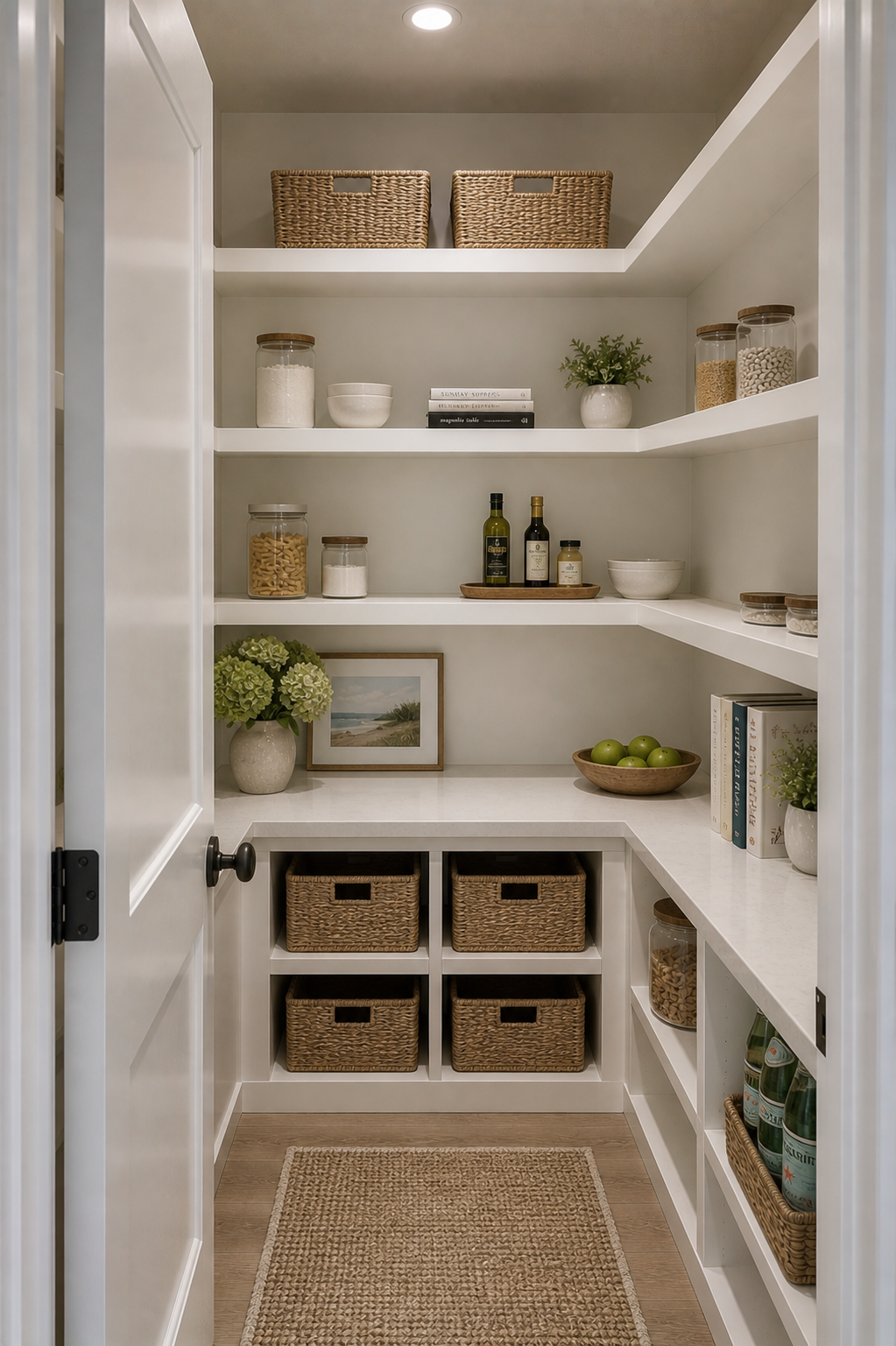
A well-functioning pantry holds a few clear categories of things: dry goods and canned goods you actually cook with, snacks and grab-and-go items your family reaches for regularly, baking supplies if you bake, and any specialty or bulk items that have a real place in your meal rotation. Everything in it should be current, visible, and genuinely useful to your family right now.
What doesn’t belong: the expired products you’ve been meaning to deal with, the empty and near-empty boxes taking up valuable real estate, and the things in transition that landed on a pantry shelf because there wasn’t anywhere else for them.
And if you have a toddler — give them a shelf. A low, accessible shelf with their snacks and pouches and the things they love most. It’s one of the smallest and most meaningful things you can do in this space, and the independence and pride it gives them is completely worth it.
How to Declutter Your Pantry Today
Give yourself 45 minutes to an hour for this one — it’s a bigger space than most of what we’ve tackled so far, but it’s deeply satisfying and well worth the time.
Step 1: Take everything out. Every single thing. Clear every shelf completely so you can see what you’re actually working with and start from a genuinely blank canvas. This step is always a little revealing — most pantries contain significantly more than people realize, including things that have been in there for a very long time.
Step 2: Clean every shelf. Before anything goes back, wipe down every surface completely. Vacuum or sweep the floor. A clean pantry is a genuinely motivating thing to put things back into intentionally.
Step 3: Check every expiration date. Go through everything and check the date. Anything expired goes — no exceptions, no keeping it just in case. Be honest and thorough here. It’s the step most people are tempted to rush, and it’s the one that makes the biggest long-term difference.
Step 4: Deal with the boxes. Empty ones go straight into recycling. Near-empty ones get consolidated into bags or containers and the boxes recycled. Do this before you put anything back so you’re not reclaiming shelf space from boxes that don’t deserve it.
Step 5: Sort what’s staying into categories. Before anything goes back on the shelves, sort everything into clear categories — canned goods, dry goods, snacks, baking supplies, breakfast items, and so on. Sorting first means putting things back with intention rather than just filling shelves.
Step 6: Return everything by category with the most-used items most accessible. Put like with like and give each category a consistent, designated spot. The things your family reaches for every day — your most-used cooking staples, your toddler’s snack shelf — go in the most accessible spots. Less-frequent items can live on higher shelves or further back.
Step 7: Give your toddler their shelf. If you have little ones and haven’t already done this — dedicate one low, accessible shelf entirely to them. Their snacks, their pouches, their grab-and-go favorites, right at their level. It’s a small thing that makes your pantry work for your whole family, and the independence it gives them is genuinely one of the loveliest things about a well-organized family home.
Step 8: Make a restocking list. As you put everything back, make a note of anything that’s running low or that you’ve realized you’re missing. A pantry declutter is one of the best opportunities to get genuinely clear on what your family actually uses and what you need to keep stocked. Add everything to your grocery list before you close the pantry door.
A Pantry That Feeds Your Family Well
There’s something really meaningful about a well-decluttered pantry. It’s not a glamorous space — it doesn’t get photographed and shared the way a living room or a kitchen does. But it’s where meals begin. It’s where your family gets nourished. It’s where Ollie walks in every morning and goes straight to her shelf with the most confident little stride, knowing exactly where everything she loves is waiting for her. Taking care of this space is a way of taking care of your family. And I think that’s always worth the extra effort.